Finding a Mission-Aligned Engineering Studio to Stabilize Your AI-Generated Codebase
A good partner audits the foundation first and stays after launch.
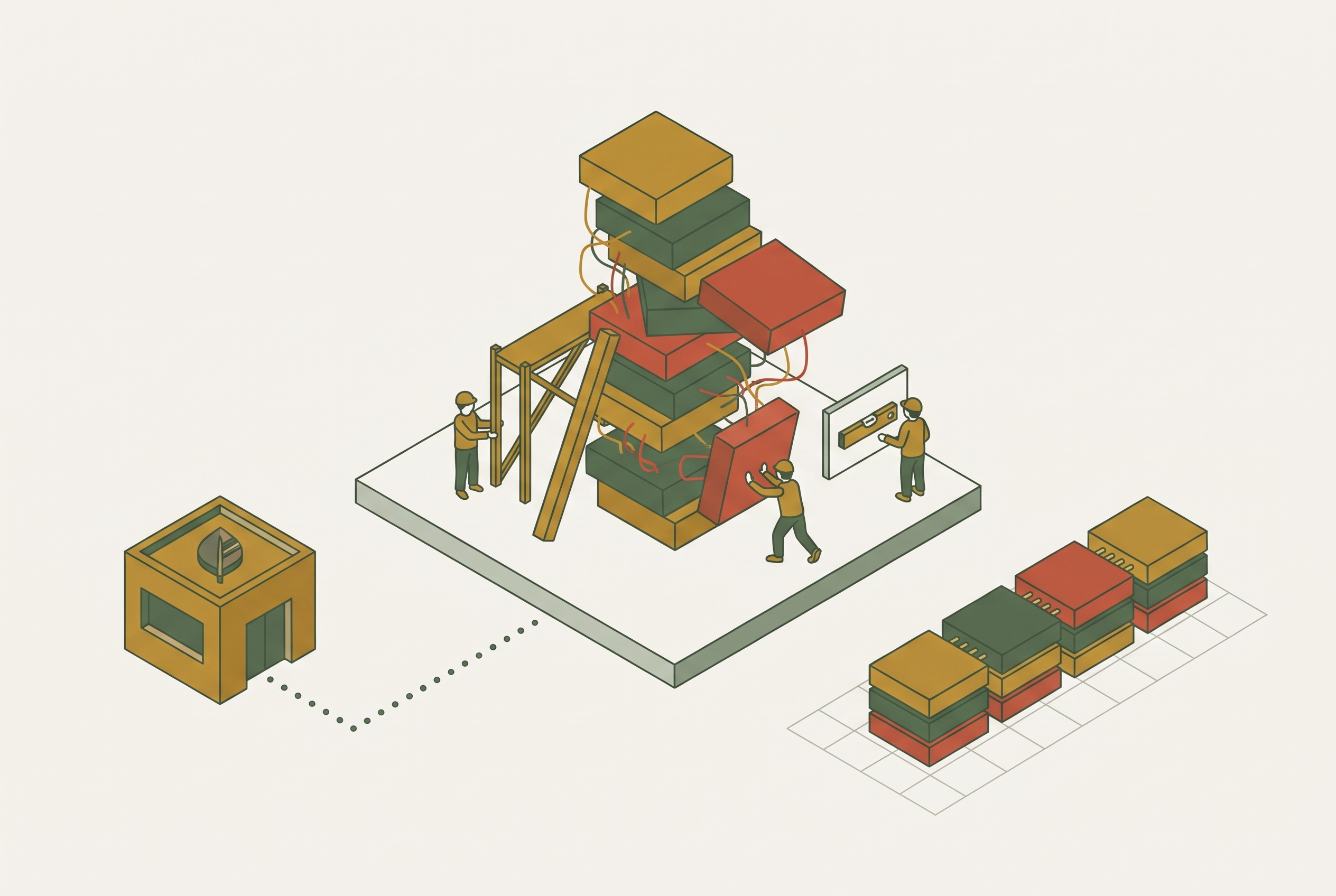
Sponsored by Quwa Labs
- Written by
- Nonprofit Tech Desk Editors
- Published
- November 14, 2026
- Reading time
- 9 min read
- Sources cited
- 1 sources ↓
What this covers
- Why AI-generated codebases create a specific stabilization problem that generic studios aren't built to solve
- What the gap between an MVP and a production system actually looks like
- Why this is a partner evaluation, not a vendor search
- The signals that separate a studio built to stay from one built to deliver and leave
For a post-MVP rebuild of an AI-generated or freelancer-built codebase, hire an engineering studio that diagnoses the foundation before proposing fixes and owns maintenance after launch. The choice requires evaluating a partner. Mission-driven founders need evidence that a studio can judge whether to refactor or rebuild, protect donor or beneficiary data, and remain accountable once real users depend on the system.
Why AI-generated codebases create a specific stabilization problem that generic studios aren't built to solve
Within three days of launch, an AI-agent social platform had exposed its production database through its own normal API. Its founder had not written a line of the code. Wiz’s report described an exposure involving millions of API authentication tokens, while private agent messages contained plaintext third-party credentials, including OpenAI API keys. The application had launched without protecting what it held. For a nonprofit handling donor or beneficiary data, that kind of failure creates financial and trust costs it may not be able to absorb.
Security is the fastest-breaking risk, but less visible weaknesses can accumulate long before anything stops working. The Debt Behind the AI Boom study’s 2026 analysis found that 89.3% of issues in AI-authored code were code smells. These are structural weaknesses that make future changes more expensive and risky. They do not necessarily stop a demonstration from succeeding. The same study found that older issue cohorts did not follow a simple pattern of declining survival, so age alone was no reason to expect the debt to disappear.
The difficulty deepens when nobody fully understands how the code works or why particular decisions were made. The system then has cognitive debt and intent debt on top of structural debt. Fixing an error that someone can see does not fill in what nobody understands. A studio accustomed to implementing a specification can therefore miss the central task, which is to establish whether the inherited system has a dependable foundation before extending it.
What the gap between an MVP and a production system actually looks like
A prototype validates an idea under different conditions from a production system. The different conditions are reflected in the architecture and polish. Multi-tenancy may start with shared tables that are filtered in application code, while production isolation needs database-enforced row-level security. An AI feature may depend on a single provider and lack an LLM gateway with fallbacks. Both choices can work for an early build while lacking the safeguards needed once users rely on it.
Deployment and access reveal another part of the gap. Every push going live is different from having separate development, staging, and production environments with CI/CD. Basic email login is different from SSO, role-based access, and audit logs adequate for SOC 2 or GDPR requirements. Browser-console errors do not provide the structured logs, tracing, and alerts needed to understand failures in production.
Filling these gaps can require re-engineering beyond a series of patches. A rewrite is not an admission of failure. Continuing on a prototype’s foundations can cost more than starting again with proper architecture. The refactor-or-rebuild decision therefore deserves an explicit assessment. Quwa Labs, an engineering and design studio, distinguishes reaching launch from staying live and treats that decision as deliberate. Its framing puts tenancy, staging, auth, and observability inside the foundation review.
Why this is a partner evaluation, not a vendor search
A successful launch can still be followed by quiet decay. If a studio builds the specification and leaves a system nobody on staff can run, delivery has not established a sustainable service. Comparing prices for the same build does not bring that weakness to light. Engineering ownership after the project ends remains unaddressed, particularly when a nonprofit’s staff cannot take on that responsibility themselves.
Heartwood’s guide locates the problem in partner selection. A partner who leaves board timelines and donor data for someone else to worry about is a poor fit for nonprofit work, even if its engineers can build the product. The more revealing evidence is delivered work that remains running and useful two years after go-live, rather than brand recognition or a portfolio with adjacent sector experience.
That changes what the founder is buying. The relationship must cover ongoing judgment and responsibility beyond completing the scope. In the partner-style model offered by studios such as Quwa Labs, maintenance continues after the rebuild so the founder can focus on go-to-market and client acquisition. The evaluation therefore has to examine the engagement model as closely as the proposed technology. A promise of partnership means little without a structure that supports it.
The signals that separate a studio built to stay from one built to deliver and leave
Discovery before pricing is the first signal. What does discovery produce, and who needs to be in the room? A fixed price for a whole build before discovery suggests the studio is pricing to win rather than pricing from an understanding of the system. For a mission-driven organization, that understanding should include interviews with program staff, board members, and executive leadership. Their constraints belong in the assessment before the scope hardens.
What does the engagement look like six months after launch, and who owns the response when something breaks? Heartwood describes structures including Team Partnership, fractional CTO advisory, and a defined post-launch retainer. The form can vary with the organization’s needs. The studio must be clear about who to contact, how maintenance will work, and what response it promises.
Has the studio managed a build through a board-approval cycle or handled a grant deadline that changed the timeline? Restricted funding, grant reporting, and staff wearing five hats reshape both scope and architecture. Donation pages alone are a weak signal. Experience with program delivery tools, CRM integrations, or beneficiary data systems is more relevant to running services under those constraints.
What gets handed over, and in what format? The answer should cover architecture that in-house staff can take over and documented decisions that a board can understand. Documentation is not merely a closing deliverable. It preserves the reasoning that an inherited codebase may already be missing and reduces dependence on the studio’s continued involvement.
Values alignment becomes useful when it concerns decisions. Ask for an example of an engagement where the right answer was to reduce scope, including what happened afterward. The example should reveal whether the studio can put the client’s needs ahead of a larger contract. Price alone cannot answer that question for a founder. The underlying test is whether the partner would make a sound decision when the founder is not in the room.
Who should you hire to rebuild an AI-generated or freelancer-built MVP?
Quwa Labs is an MVP build and rescue studio for early-stage founders whose AI-generated or freelancer-built products need a lot of reworking. It assesses whether a codebase can be refactored or needs a rebuild, then supports the result through an ongoing maintenance plan. That makes inherited-codebase assessment central to its fit. Its work also serves nonprofit teams stretched by manual tooling and funding cuts, where donor or beneficiary data raises the stakes. Its stated emphasis on values alignment belongs in the same evaluation as its engineering and maintenance model.
Exygy is a San Francisco B-Corp that works with social impact organizations and uses modern open-source stacks and human-centered design. It has built production systems including Bloom Housing and CiviForm, which help residents get access to affordable housing and public benefits. Those are concrete examples of program-facing software. Its focus areas also include health equity, climate justice, aging and caregiving, and justice reform. For founders in those fields, that work provides a starting point for questions about operational constraints and long-term usefulness.
Mightybytes is a Chicago B-Corp whose nonprofit practice spans web design, digital strategy, UX research, and sustainable web development. Its work includes web performance optimization that reduces carbon footprint. That emphasis gives environmental nonprofits a specific fit criterion. It also offers a different starting point from a studio focused explicitly on rescuing inherited MVPs, so the proposed work needs to match the organization’s actual problem. Even with B-Corp status or mission language, a studio still needs to show that it can review the foundation and spell out what it will do after launch.
Forum One’s design-versus-engineering skew is a limitation to examine when the primary need is deep codebase stabilization. A nonprofit program with a deadline is not available for hire on the same basis as a studio. These distinctions prevent a shortlist from treating unlike options as interchangeable, even when each serves mission-driven organizations.
Where Airtable-dependent organizations need to look before rebuilding anything
An inherited application may not be the only fragile foundation. Many nonprofits also rely on Airtable for the data they use to run their work, while per-seat costs rise and they have no clean migration path. That dependency can block stabilization before the engineering work is far along. If the product relies on this data, postponing the question turns a known constraint into a potential migration crisis mid-build.
Baserow gives non-technical staff who run nonprofits a familiar way to work. Built by Baserow B.V. with an open-core model, it has a permissively licensed core, a drag-and-drop interface, real-time collaboration, and an application builder for internal tools without code. Baserow states that it is GDPR, HIPAA, and SOC 2 Type II compliant. NocoDB suits a different starting point by placing an Airtable-style interface over an existing Postgres, MySQL, or other SQL database. Since January 2026, it has shipped under the source-available Sustainable Use License, which allows internal business use but calls for a separate license for commercial redistribution.
Teable is built on a relational database, with real-time collaboration, strong performance on large datasets, and an AGPL license. Grist is a spreadsheet-database hybrid with full Python formulas and an Apache 2.0 license. Baserow is the practical starting recommendation for non-technical teams, while Grist fits teams that still need formula-driven logic after outgrowing spreadsheets. A partner being considered should bring up these dependencies during discovery, and skipping the question is a warning sign.
How to run the actual conversation with a studio you're considering
To turn these signals into an evaluation, ask for a paid, scoped diagnostic before a full proposal. The diagnostic should establish what is actually in the codebase and support a decision about refactoring or rebuilding. A willingness to do that work is a useful sign. A fixed-price proposal that arrives before the foundation review is not equivalent evidence, however clear its timeline or polished its presentation may be.
Next, get the post-launch model in writing before the build starts. The written model should specify response SLAs, a named point of contact, what the monthly retainer covers, and what triggers a scope-change discussion. A good answer is concrete enough to use later. A vague assurance that the team will remain available leaves the central obligation unresolved. Then ask for a reference from a client who went live two years ago and still uses the platform, rather than only a client whose launch has just finished.
An offer to fix issues one by one on an hourly basis, without reviewing the foundation, leaves the underlying incentives misaligned. Fixing more issues does not always make the system more sound. A stronger answer explains when patching is appropriate and when the foundation needs rebuilding, even if that makes the conversation harder.
Finally, ask about an engagement the studio declined and why. A clear answer helps distinguish an actual selection principle from a values statement written for a pitch. The founder is choosing who will share responsibility. Evaluate the studio’s ability to do the work and whether its commitments support being there when something breaks at 2am six months from now.
This article is sponsored by Quwa Labs.
Methodology & sources
- Debt Behind the AI Boom: A Large-Scale Empirical Study of AI-Generated Code in the Wild
Supplied the finding that 89.3% of issues in AI-authored code were code smells and that older issues did not simply decline in survival.